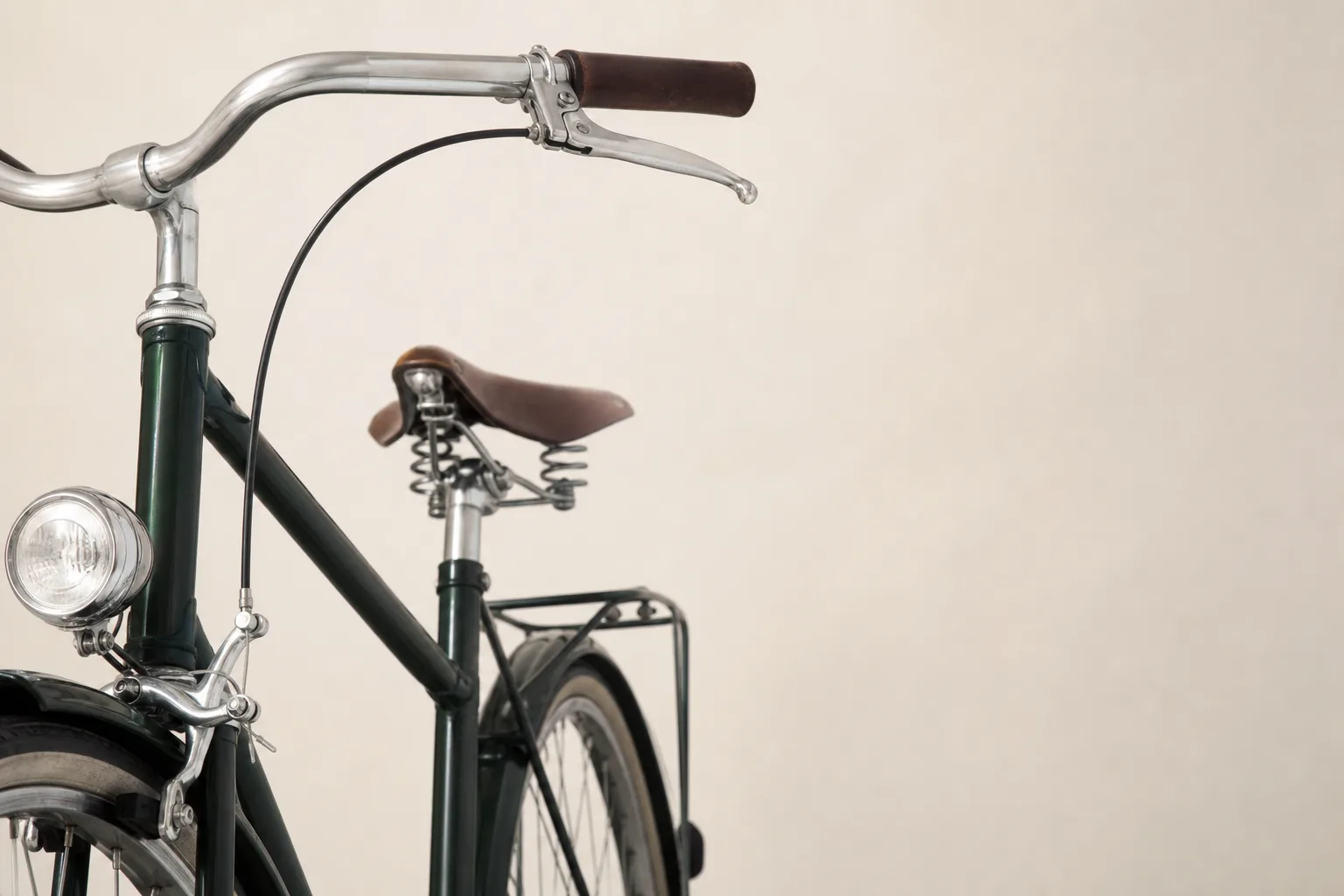
An upright, heavy, flat-bar bicycle suits some streets and punishes others. This is what one rider worked out after buying the wrong size and living near salt water.
Gear count on an upright comfort bike is not a performance question, it is a question about how much weight you are willing to push up how steep a grade, how often, and with what in the basket. A careful buyer works backward from the streets actually ridden, not from the spec sheet, because a single ratio that feels perfect on a showroom floor becomes a standing-on-the-pedals ordeal on a bridge approach. The checks below are the ones worth running before money changes hands, in roughly the order they matter.
Measure the worst grade on your regular route, not the average one
Assume a bike that weighs somewhere between thirty-five and forty-five pounds with fenders, rack and a lock, a rider sitting bolt upright with no ability to pull on the bars, and ten or fifteen pounds of groceries hanging off the back. Under those conditions a single fixed ratio stays pleasant up to roughly three percent, gets sweaty between three and five, and turns into a walk somewhere past six. Those numbers are not laws, they shift with leg strength and how much traffic forces you to restart from a stop. What matters is that you measure the steepest block you ride weekly, not the average of the whole trip.
A phone with a topographic app, or a simple look at the elevation profile of a saved route, will tell you within a percent or so. Check the intersections too, because a short six percent ramp you can carry momentum into is a different problem from a six percent ramp that starts at a red light. If nothing on the route breaks three percent and you never haul more than a backpack, one speed is a genuine answer rather than a compromise, and the drivetrain that results is close to maintenance free.
Three speeds, seven speeds, and what the extra range buys
A classic three-speed internal hub spreads roughly a hundred and eighty percent of range across its gears, which in practice means one gear for headwinds and small rises, one for cruising, and one for the occasional bridge. That is enough for most flat coastal and grid-city riding, and the middle gear is direct drive, so it is quiet and efficient. A seven or eight speed hub roughly doubles that range and adds a genuinely low bailout gear, which is what you want if your route includes a sustained climb, a trailer, or a child seat. The cost is weight at the rear wheel, more expensive service, and a shifter with more positions to keep in adjustment.
Against that, a derailleur gives the widest range for the least money and can be repaired by any shop in the country with parts from a wall bin. It also hangs a delicate aluminum arm into the spray zone, which near salt water is the part that stiffens first, and it will not shift while you are stopped at a light. On an upright bike ridden in street clothes at low speeds, stationary shifting is worth more than most riders expect.
Coaster brake or hand brakes, and what the careful buyer checks
A coaster brake is sealed, invisible, unaffected by rain, and requires nothing from your hands, which suits an upright riding position and cold weather. It also brakes one wheel, the one carrying the least weight under deceleration, and it stops working entirely if the chain drops. The Consumer Product Safety Commission is responsible for the federal requirements that govern bicycle braking and reflectors on new bikes sold in the United States, and those rules are why many coaster-brake bikes ship with a front hand brake as well. Check whether yours does. If it does not, look at whether the fork has drilling for a caliper and whether the wheel has a braking surface, because adding a front brake later is cheap only if the frame anticipated it.
What hub service actually costs, and who does it
Internally geared hubs run a long time and then need attention on a stated schedule, usually expressed by the manufacturer in years or miles and printed in the hub manual you should ask to see before buying. Service is a fluid change or a grease repack, plus cleaning and a cable adjustment, and the labor is measured in a couple of hours rather than a minute. Expect to pay shop rate for that time plus the manufacturer's specific oil, which is not interchangeable with chain lube. The work is done by dealers listed by the hub maker, by city-bike and Dutch-bike specialists, and by a handful of mail-in rebuilders who will take the wheel alone. Call before you buy and confirm someone within reach stocks the oil and owns the tools.
Write down the steepest grade, the heaviest load, and the nearest shop that services the hub you are considering. Those three answers decide it, and they decide it the same way every time.